
Testosterone and Age: What Actually Happens After 30
Updated 16 August 2026Primordial Vigor X Editorial TeamAbout 7 min read
Key points
- Age-related testosterone decline is real but gradual — roughly 1% per year after 30 in most men.
- Symptoms overlap heavily with sleep deprivation, obesity and depression, so they can't diagnose anything alone.
- A morning blood test is the only way to know, and it should be repeated before acting on it.
- Weight, sleep, alcohol and resistance training influence levels more than any supplement.
The actual numbers
Testosterone declines with age. That much is well established and not controversial. What gets distorted is the scale.
The commonly cited figure from longitudinal research is roughly 1% per year after about age 30 for total testosterone. Free testosterone — the portion not bound to carrier proteins — tends to decline somewhat faster, because SHBG levels typically rise with age and bind more of the total.
One percent a year is a slow curve. It means a man of 50 might sit around 20% below where he was at 30, which for most is still comfortably inside the normal reference range. It does not mean a cliff, and it does not mean every man over 40 has a deficiency.
Marketing in this category tends to present decline as dramatic and universal. The data doesn't support that framing, and being clear-eyed about it makes you a better judge of the products built on it.
What symptoms mean and don't
The symptom list attached to low testosterone is genuinely long: fatigue, reduced libido, low mood, difficulty building muscle, poor concentration, reduced motivation.
Here's the problem with using it diagnostically. That list is almost identical to the symptom profile of chronic sleep deprivation. It also overlaps substantially with depression, thyroid dysfunction, iron deficiency and simply being significantly overweight.
Symptom checklists on supplement pages exploit this. Nearly every adult man can tick several boxes on a bad month, which is precisely why they're effective marketing and useless as diagnosis.
If you recognise yourself in that list, the useful conclusion isn't "I need a testosterone supplement." It's "something is worth investigating properly."
What accelerates decline
Age sets a baseline trajectory. Several things steepen it, and they're largely within your control.
Excess body fat is the most significant. Adipose tissue contains aromatase, the enzyme converting testosterone to oestradiol, so higher fat mass generally means more conversion. This runs in a loop, since lower testosterone makes maintaining lean mass harder.
Chronic short sleep has measurable effects. Studies restricting healthy young men to around five hours nightly for a week have shown meaningful drops in daytime testosterone — a fortnight of poor sleep can affect levels more than a decade of ordinary ageing.
Heavy alcohol intake affects the hypothalamic-pituitary-gonadal axis at several points.
Chronic stress and sustained elevated cortisol suppress the same axis.
Some medications — certain opioids, glucocorticoids and others — affect levels directly. Worth raising with your prescriber rather than assuming.
When to get tested
If symptoms are persistent and affecting your life, get a blood test. It's inexpensive, widely available, and it replaces guesswork with a number.
Two practical points about timing. Testosterone follows a daily rhythm, peaking in the morning, so the sample should be taken in the morning, generally before 10am. And levels fluctuate enough day to day that a single low result should be repeated on a separate morning before anyone acts on it.
Ask for total testosterone, free testosterone and SHBG together. Total alone can be misleading when SHBG is high or low.
How to read your results
Reference ranges vary between laboratories, which surprises people. A result flagged "normal" at one lab might sit at the lower boundary elsewhere.
More usefully: a result inside the range but at the bottom, combined with genuine symptoms, is worth discussing with a doctor rather than dismissing. Equally, a result inside the range with no symptoms doesn't require action.
This is a conversation for a clinician who can see your full picture — medications, weight, sleep, other bloods. It isn't something to interpret from a website, including this one.
What you can influence
In rough order of impact:
Body composition. If you're carrying significant excess weight, losing some of it is the single most reliable lever available. The effect is well documented.
Sleep. Seven or more hours consistently. Given the research on restriction, this may be the fastest-acting item on the list.
Resistance training. Supports lean mass, which supports metabolic health, which supports the whole picture. It also produces acute post-exercise elevations, though the long-term benefit comes mainly through body composition.
Alcohol moderation. Particularly relevant if intake is regularly heavy.
Correcting genuine nutrient deficiencies. Zinc and vitamin D deficiency are associated with lower levels — but correcting a deficiency helps, whereas supplementing beyond adequacy generally doesn't.
Our energy and stamina guide covers the practical side of the first three.
Where supplements fit
At the margins, honestly, and after the above. No dietary supplement replaces weight loss, sleep or training, and none is a treatment for clinically low testosterone — that's a medical matter requiring a doctor.
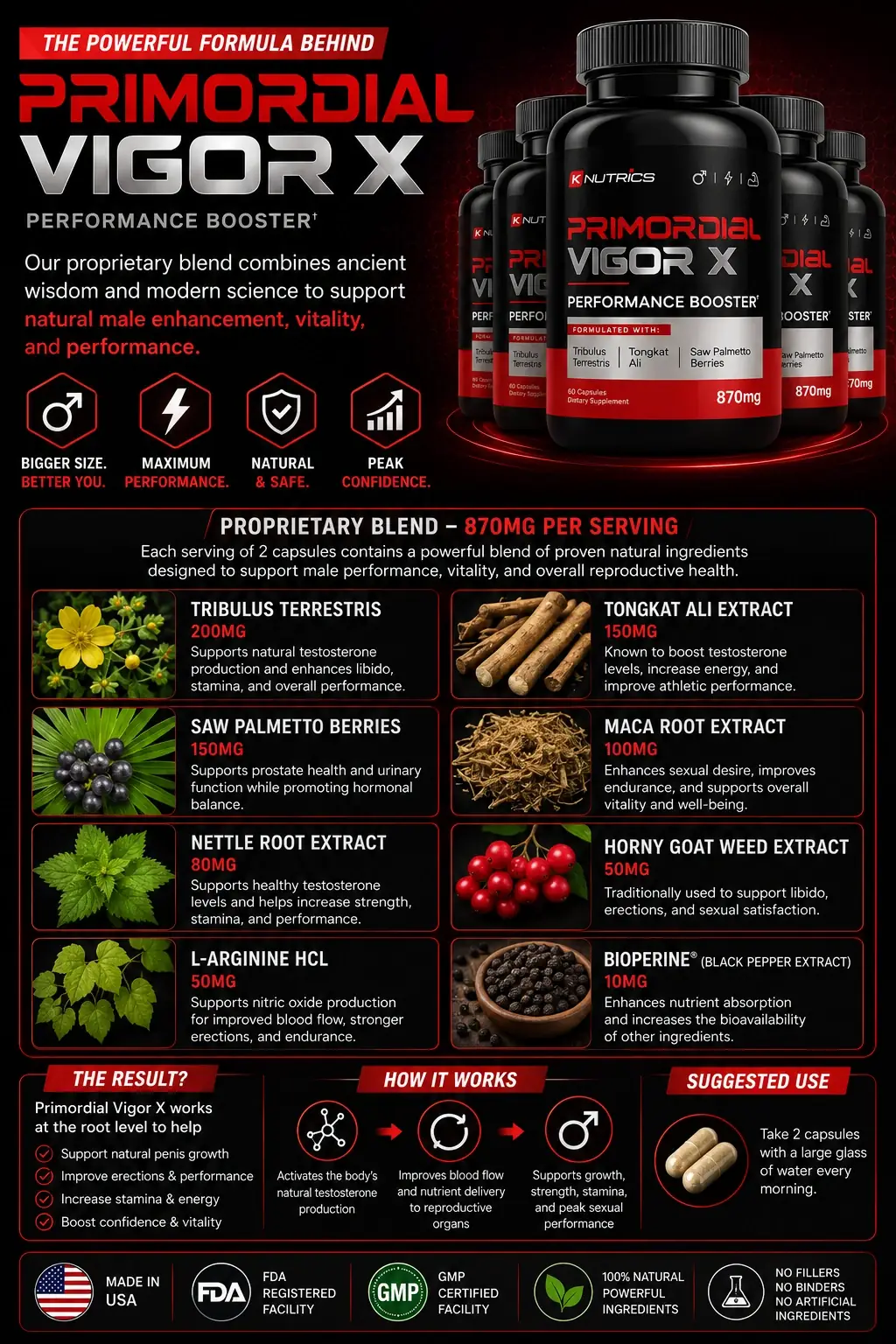
What a daily supplement can reasonably be is one small consistent component of a routine already containing the things that matter. That's the framing behind Primordial Vigor X, which is positioned around everyday vitality as part of a healthy lifestyle rather than as a treatment for anything.
Two things to hold onto when evaluating any product in this space. First, ingredient disclosure matters — our formula page explains what is and isn't published for this product, and why we won't invent the rest. Second, be sceptical of dramatic claims; our red flags guide covers the specific language worth walking away from.
And if your symptoms are persistent, get the blood test. It costs less than most supplement packages and tells you something real.
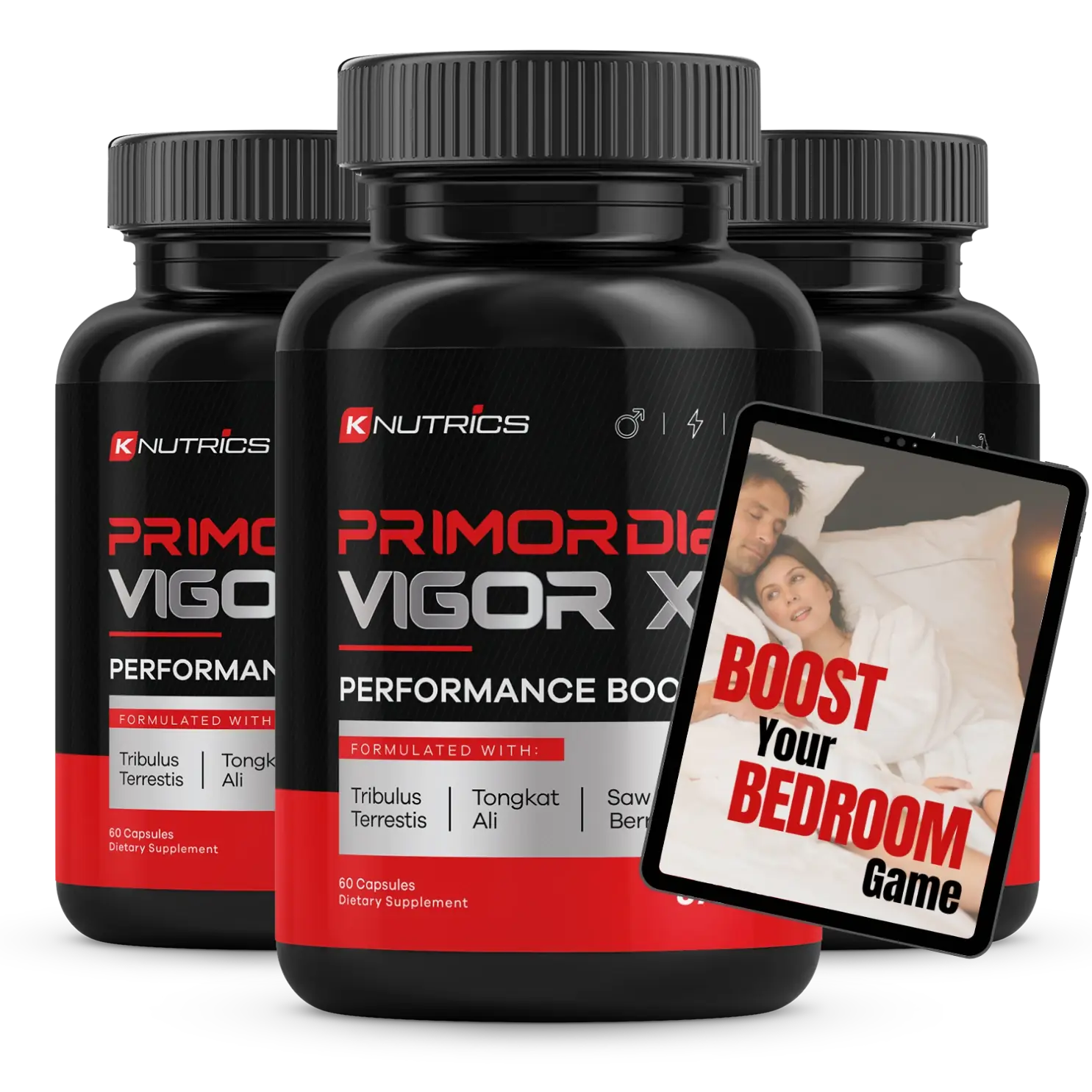
Two capsules. One morning routine.
Primordial Vigor X is a men's daily supplement made in the USA in a GMP-certified facility — one-time purchase, free US shipping on 3 and 6 bottle orders, and a 60-day money-back guarantee that accepts empty bottles.
Individual results may vary.
Order Now →Common questions
How fast does testosterone decline with age?
Longitudinal research commonly cites roughly 1% per year in total testosterone after about age 30. Free testosterone tends to decline somewhat faster because SHBG typically rises with age.
Can symptoms alone tell me if my testosterone is low?
No. The symptom profile overlaps heavily with chronic sleep deprivation, depression, thyroid dysfunction and excess body weight. A morning blood test, repeated, is the only reliable way to know.
When should I get a testosterone blood test?
If symptoms are persistent and affecting your life. Take the sample in the morning, generally before 10am, and repeat a low result on a separate morning before acting on it.
What influences testosterone most?
Body composition, sleep duration, alcohol intake, chronic stress and certain medications. These generally matter more than any supplement.
Primordial Vigor X Editorial Team This article is written and maintained by our in-house editorial team. We do not employ or cite medical professionals, and this is general information rather than medical advice. See our editorial policy for how we handle product claims and what we will not publish.
Important safety information
Primordial Vigor X is a dietary supplement for adult men aged 18 and over. It is not intended for women or anyone pregnant or breastfeeding, and it is not intended to diagnose, treat, cure or prevent any disease.
Consult a healthcare professional before use if you take prescription medication, have sensitive allergies, manage a chronic condition, or are preparing for a medical procedure. Neither this website nor this product should substitute medical advice from a certified health professional.
These statements have not been evaluated by the Food and Drug Administration. Individual results may vary.
Return to the Primordial Vigor X homepage, see what the formula does and doesn't disclose, or read our full product assessment.